The Aesthetic Bedroom Trend That's Costing You Hours of Sleep
⏱️ 8 min read
Your Instagram-worthy bedroom might be sabotaging your sleep. From LED strips to all-black interiors, here's how aesthetics clash with recovery.
TL;DR
Popular bedroom aesthetics — LED strip lights, dark moody color schemes, and ultra-minimalist setups — often sacrifice the environmental cues your body needs to wind down. Optimizing for sleep does not mean abandoning style, but it does mean making a few changes your Instagram followers will never notice but your body will thank you for.
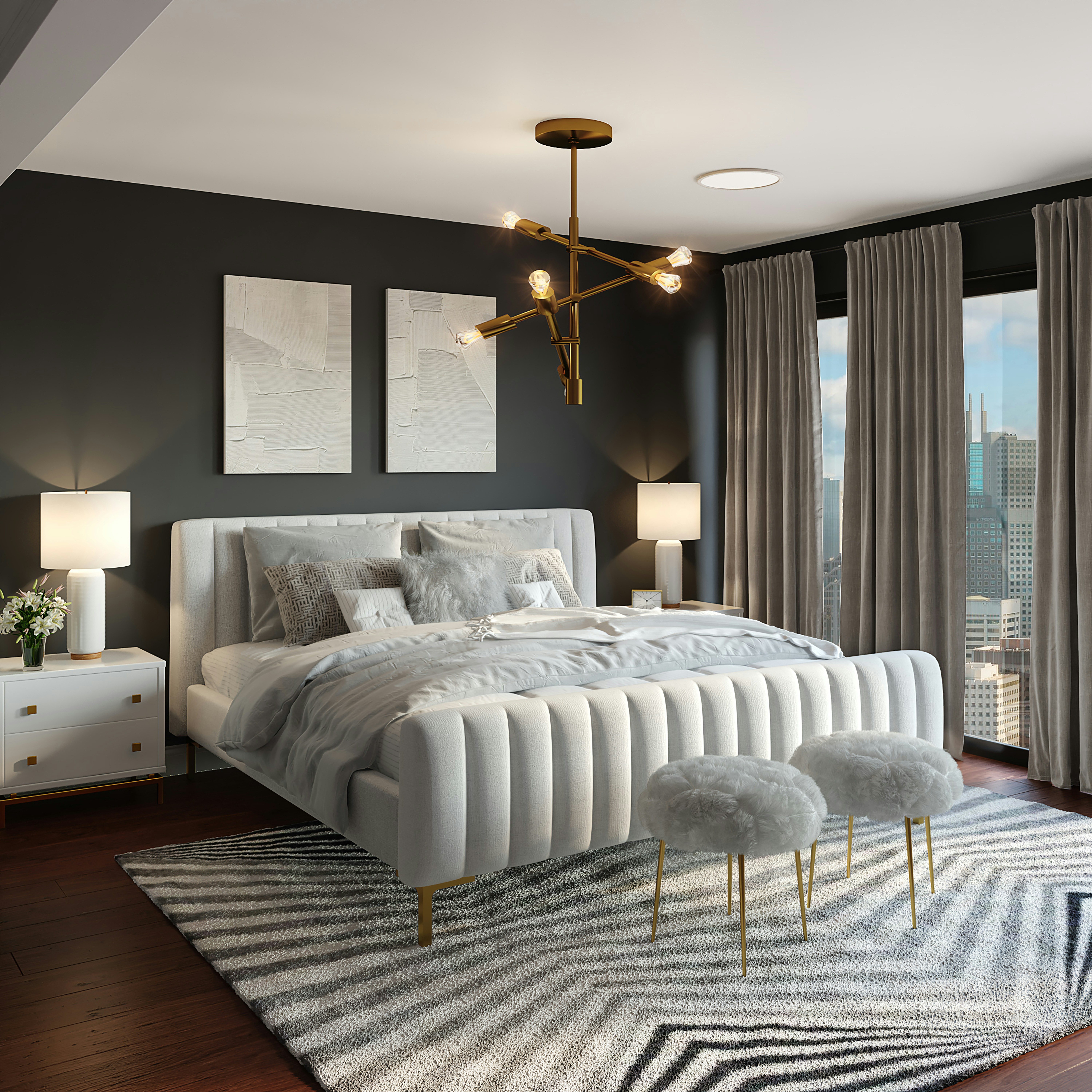
You spent three hours picking the perfect moody color palette. The LED strips behind your headboard cycle through a slow gradient. Your nightstand has exactly one candle and one book, placed just so. Your bedroom looks incredible.
And you cannot fall asleep to save your life.
Here is the uncomfortable truth that nobody on bedroom-inspo TikTok wants to talk about: the most photogenic bedrooms are often the worst designed for actual sleep. We have gotten so good at curating spaces for how they look on a screen that we have forgotten what a bedroom is actually for.
After testing this with my own bedroom — and talking to sleep researchers who study this exact problem — the gap between aesthetic appeal and sleep quality is wider than you think.
The LED Light Problem Nobody Discusses
LED strip lights are everywhere. Behind headboards, under beds, around mirrors. They look cinematic. They photograph beautifully. And they are quietly wrecking your melatonin production.
Most cheap LED strips emit light in the blue spectrum, even when set to warm colors. A 2023 study from the University of Houston found that blue-enriched light exposure in the two hours before bed suppresses melatonin by up to 50 percent and delays sleep onset by an average of 30 minutes. That is not a rounding error — that is the difference between falling asleep at 11 and staring at the ceiling at midnight.
"People assume that because the light looks warm to their eyes, it's biologically warm," says Dr. Anne-Marie Chang, a sleep researcher at Penn State. "The visual appearance of light and its biological effect are two completely different things. Your photoreceptors respond to wavelengths you cannot consciously perceive."
The fix is not to remove all ambient lighting. It is to switch to genuinely warm-spectrum options — amber LED bulbs (under 2700K) or, better yet, salt lamps and candlelight for the last hour before bed. Save the RGB strips for movie nights, not nightly use.
The Dark Aesthetic Trap
Black walls, charcoal bedding, dark wood furniture. The moody bedroom look is having a major moment, and visually, it is stunning. But darkness as a design choice and darkness as a sleep signal are not the same thing.
The problem is contrast. When your entire bedroom is dark — dark walls, dark furniture, dark bedding — you lose spatial cues that help your brain orient and relax. Sleep psychologist Dr. Shelby Harris notes that environments with subtle visual depth actually help people feel more settled than uniformly dark spaces, which can trigger a low-grade hypervigilance response.
"Your brain is still scanning for threats when it cannot distinguish boundaries in a space," Harris explains. "Even a single lighter accent — a cream throw, a pale wood element, a soft rug — gives your visual system something to anchor to."
After testing this, I added a single light linen throw blanket and swapped my nightstand to a lighter wood tone. The room still looks cohesive and moody. But I stopped waking up at 3 AM feeling oddly alert. The difference was not subtle.
Minimalism That Goes Too Far
The ultra-minimalist bedroom — bare walls, one pillow, nothing on any surface — photographs like a design magazine. It also feels like sleeping in a hotel room where you are not sure if you are welcome.
There is a concept in environmental psychology called "soft fascination," and it matters for sleep. Spaces that offer gentle, non-demanding visual interest — a textured wall, a plant, a stack of books — allow your mind to wander without engaging the alertness circuits. Sterile environments, by contrast, keep your attention scanning because there is nothing soft to rest on.
This does not mean clutter is good. Clutter raises cortisol. But the answer to clutter is intentional curation, not elimination. A woven basket with a throw blanket inside. A small plant on the windowsill. One piece of art you actually like, not something chosen to match a color scheme.
Think of it this way: a bedroom should feel like a gentle exhale, not a showroom floor.
The Temperature Aesthetic Conflict
Heavy, beautiful duvets photograph like a dream. Layered throws, chunky knit blankets, thick curtains — they all look impossibly cozy. And they are making you too hot to sleep well.
Your core body temperature needs to drop by about two degrees Fahrenheit to initiate sleep. This is not optional — it is a biological requirement. Thick bedding traps heat, especially if you are also running a dark, poorly ventilated room.
The solution is layering with function in mind. Use lighter, breathable base layers — linen or cotton percale — and keep the heavier decorative throws as a visual layer that you can push aside. Your bed can still look like a magazine cover. Just make sure the layers touching your skin are not turning it into a furnace.
A 2024 study in the Journal of Physiological Anthropology found that sleepers using breathable linen bedding fell asleep 15 minutes faster on average and reported 22 percent better subjective sleep quality compared to those in thick polyester-blend duvets. The visual difference between a linen duvet and a polyester one is negligible. The sleep difference is not.
Smart Lighting That Is Not Smart
Many bedroom aesthetic trends incorporate smart lighting — app-controlled bulbs, voice-activated scenes, programmable color shifts. The technology is impressive. The implementation is usually terrible for sleep.
The problem is that most people set their smart lights to one scene and never change it. A warm evening scene stays on until they fall asleep, which sounds good, but the act of pulling out your phone to control it introduces screen light at exactly the wrong moment. And the subtle awareness that you could change the lighting at any time keeps a small part of your brain in control mode rather than surrender mode.
Dr. Matthew Walker, author of Why We Sleep, recommends what he calls "analog sunset lighting" — lights that gradually dim on a timer without requiring any interaction. "The best sleep lighting is lighting you don't think about," he says. "The moment you are making decisions about your environment, you are activating prefrontal circuits that should be powering down."
If you use smart bulbs, program a scene that starts dimming at the same time every night automatically. Do not use your phone to trigger it. Let it happen passively, like actual sunset.
What a Sleep-Optimized Bedroom Actually Looks Like
Here is the good news: optimizing for sleep does not mean your bedroom has to look like a hospital room. Some of the most beautiful bedrooms in the world — think Scandinavian hygge, Japanese wabi-sabi, Mediterranean warmth — are already designed around sleep-friendly principles. They just do not call it that.
The core principles are straightforward:
Warm, indirect lighting that dims automatically. Table lamps with amber bulbs on smart timers. No overhead lights after 8 PM. No LED strips on during wind-down.
A mix of textures at different lightness levels. Your room should not be all dark or all light. Aim for visual depth — lighter bedding, a medium-tone wall, darker furniture. This gives your brain gentle contrast to settle into.
Temperature-controlled bedding. Breathable natural fibers next to your skin. Decorative layers on top that you can remove. Keep the room around 65-68°F if possible.
One or two "soft fascination" objects. A plant. A textured wall hanging. A small stack of physical books. Nothing demanding. Just something gentle for your eyes to land on when they are not yet closed.
Zero visible screens. This is non-negotiable. If your phone is on your nightstand, it is a sleep disruptor regardless of what your room looks like. Drawer. Another room. Somewhere you cannot reach it without getting up.
The Bottom Line
Your bedroom should be the most beautiful room in your home — and also the most functional for rest. These goals are not in conflict. They only seem that way because current design trends optimize for photographs instead of physiology.
The best bedroom you will ever sleep in will never go viral. It will not have the perfect color-blocked throw arrangement or the most dramatic LED setup. But it will have something no amount of aesthetic curation can fake: you, falling asleep quickly, staying asleep deeply, and waking up actually rested.
That is worth more than any number of saves on Pinterest.